Mother of Humanity
(Mitochondrial Eve)
You Can Inherit Mitochondrial DNA
Why do I have so many Y-DNA matches?
Having many Y-DNA matches means you have a more common Y-DNA signature (haplotype). This can mean that your lineage has survived and reproduced well. As a result, many people share the same signature. Testing additional markers (Y-37, Y-67, or Y-111) will refine your list of matches to those that are genealogically relevant, meaning those with whom you share a common ancestor in 1 to 15 generations.
from Both Parents! | SciShow News
Kit: Neusa
Haplogroup Analytics
A female inherits an mtDNA haplogroup from their mother, whereas a male inherits both the mtDNA haplogroup and a Y-chromosome haplogroup. Depending on the quality of each ancient sample, we can determine one or both. A mtDNA haplogroup specifies the all female lineage of any sample, whereas the Y-DNA haplogroup determines the all male lineage.
For all the ancient samples we have which match your kit, we have collected the mtDNA and y-DNA Haplogroups and combined them into a chart. This chart is a personalized estimation of your haplogroup ancestry - e.g. your Ancient Ancestors collectively may have the Haplogroups distributed as shown!
This is mtDNA distribution of all the samples which match this kit;

L 87,5 %
Mt-Haplogroup L0 is the clade of the woman who lived about 125.000 years ago in south or east Africa. All mitochondrial DNA lineages of humankind today are her descendants.
L0d is represented by click speaking forager peoples of Southern Africa, defined as Khoisan, living at the semi-desert regions of Namibia and Botswana.
L0d2c is found in an 2,330 year old male skeleton of a pre-pastoral Southern African marine forager. This clade only survived in sister clades.
L1 is the first subgroup, spread throughout the whole of Africa.
L2 and L3 appeared about 70.000 years ago. After a gradual and sustained population decline, a rapid population growth occurred in which L2 and L3 took the place of the L0 and L1 women. These latter have remained only among the Khoisan (Bushmen) and Bayaka (Western Pygmies).
L3 arose in North East Africa. From this sprang the mt-Haplogroups M and N which have spread throughout Eurasia.
The women in the groups that arrived in Eurasia sixty thousand years ago had the haplogroups M and N.
H 2,79 %
Mt-Haplogroup H arose 35.000 years ago in central Asia and, with a 40% rate of occurrence, is the major mt-haplogroup in Europe today. It is noteworthy that the rate of occurrence in archaeological European DNA from 7,500 years ago is only half and, in Mesolithic material, hardly any at all. (25)
The current diversity appears to have originated during the mid-Neolithic, about 6.000 years ago, with later contributions from Iberia about 5.000 years ago.
H1 is highest among the Norwegians at 30% , with descending rates from there.
H2 is found in low concentrations on Sardinia and also in the Caucasus. It seems to accompany Y-DNA: G2a.
H3 is found at a rate of 10-12% in Portugal, northern Spain, and Sardinia, and at a rate of 6% in Ireland, Norway and Hungary.
H5 and H7 are found in the Caucasus and in low concentrations along the Mediterranean, in Anatolia along the Danube as far as the Alps. It possibly accompanies Neolithic Y-DNA: E1b1b, R1b1b2, J2 and T,
H13 has the same distribution as H2.
predating race;
L 47.3%
←
Philpadelphia Cholera Victim | 1843 AD (309013) | Genetic Distance: 16.19 | mtDNA: L3d1b3 | ||
Deep Dive Shum Laka Cameroon | 1200 BC (I10874) | Total shared SNPs: 196.0 | Largest SNP chain: 196.0 | mtDNA: L1c2a1b | |
Deep Dive Medieval Coastal Kenya Mtwapa | 1600 AD (I17413) | Total shared SNPs: 107.0 | Largest SNP chain: 107.0 | mtDNA: L0a1b2a | |
Deep Dive Eland Cave South Africa | 1500 AD (ela001) | Total shared SNPs: 426.0 | Largest SNP chain: 236.0 | mtDNA: L3e3b1 | |
Deep Dive Shum Laka Cameroon | 1200 BC (I10873) | Total shared SNPs: 129.0 | Largest SNP chain: 129.0 | mtDNA: L1c2a1b1 | Y-DNA: B2b |
Deep Dive Khwit son of Zana | 1934 AD (Khwit) | Total shared SNPs: 457.0 | Largest SNP chain: 292.0 | mtDNA: L2b1b | Y-DNA: R1b1a1b1b |
Deep Dive Shum Laka Cameroon | 1200 BC (I10871) | Total shared SNPs: 329.0 | Largest SNP chain: 215.0 | mtDNA: L0a2a1 | Y-DNA: A00-T |
Deep Dive Ballito Bay South Africa | 110 AD (baa001) | Total shared SNPs: 157.0 | Largest SNP chain: 157.0 | mtDNA: L0d2c1 | Y-DNA: A1b1b2b |
Deep Dive Iron Age Kenya Pastoral Emurula Ole Polos Cairns | 1750 AD (I12379) | Total shared SNPs: 106.0 | Largest SNP chain: 106.0 | mtDNA: L3h1a2a1 | Y-DNA: E1b1b1b2b2a1 |
Deep Dive Medieval Coastal Kenya Mtwapa | 1600 AD (I19414) | Total shared SNPs: 109.0 | Largest SNP chain: 109.0 | mtDNA: L1c3a1b1 | |
Deep Dive Kenya Ilkek Mounds PIA | 920 AD (I8892) | Total shared SNPs: 110.0 | Largest SNP chain: 110.0 | mtDNA: L0f2a | Y-DNA: E2(xE2b) |
Deep Dive Neolithic Tanzania Cushitic | 400 BC (I13979) | Total shared SNPs: 139.0 | Largest SNP chain: 139.0 | mtDNA: L3x1 | |
Deep Dive Xaro Botswana | 850 AD (XAR002) | Total shared SNPs: 146.0 | Largest SNP chain: 146.0 | mtDNA: L0k1a2 | Y-DNA: E1b1b1b2b2 |
Deep Dive Medieval Coastal Kenya Mtwapa | 1600 AD (I19401) | Total shared SNPs: 110.0 | Largest SNP chain: 110.0 | mtDNA: L0a2a2a | Y-DNA: J1a2a1a2d2b |
Deep Dive Kenya Jawuoyo Rockshelter South-East African Hunter Gatherer | 250 AD (I8808) | Total shared SNPs: 136.0 | Largest SNP chain: 136.0 | mtDNA: L4b2a2c | Y-DNA: E1b1b1a1b2 |
Deep Dive Medieval Tanzania Songo Mnara | 1710 AD (I19549) | Total shared SNPs: 106.0 | Largest SNP chain: 106.0 | mtDNA: L3d1a1a1 | Y-DNA: E1b1b1a1a1b2 |
Deep Dive Medieval Coastal Kenya Taita Taveta Makwasinyi | 1750 AD (I13871) | Total shared SNPs: 109.0 | Largest SNP chain: 109.0 | mtDNA: L3d1a1a | |
Medieval Coastal Kenya Mtwapa | 1600 AD (I19411) | Genetic Distance: 9.695 | mtDNA: L1c3a1b | ||
Medieval Tanzania Songo Mnara | 1415 AD (I19552) | Genetic Distance: 10.01 | mtDNA: L3e2b1a2 | ||
Medieval Coastal Kenya Mtwapa | 1600 AD (I19419) | Genetic Distance: 11.56 | mtDNA: L3f1b1a1 | Y-DNA: J1a2a1a2 |
This is Y-DNA distribution of all the samples which match this kit

E1b 36.4%
←
Deep Dive Iron Age Kenya Pastoral Emurula Ole Polos Cairns | 1750 AD (I12379) | Total shared SNPs: 106.0 | Largest SNP chain: 106.0 | mtDNA: L3h1a2a1 | Y-DNA: E1b1b1b2b2a1 |
Deep Dive Neolithic Tanzania Cushitic | 600 BC (I13980) | Total shared SNPs: 138.0 | Largest SNP chain: 138.0 | mtDNA: HV1b1 | Y-DNA: E1b1b1a1b2 |
Deep Dive Iberian Cordoba Caliphate | 1050 AD (I7498) | Total shared SNPs: 120.0 | Largest SNP chain: 120.0 | mtDNA: H3a1 | Y-DNA: E1b1b1a1b1a |
Deep Dive Xaro Botswana | 850 AD (XAR002) | Total shared SNPs: 146.0 | Largest SNP chain: 146.0 | mtDNA: L0k1a2 | Y-DNA: E1b1b1b2b2 |
Deep Dive Kenya Jawuoyo Rockshelter South-East African Hunter Gatherer | 250 AD (I8808) | Total shared SNPs: 136.0 | Largest SNP chain: 136.0 | mtDNA: L4b2a2c | Y-DNA: E1b1b1a1b2 |
Deep Dive Medieval Tanzania Songo Mnara | 1710 AD (I19549) | Total shared SNPs: 106.0 | Largest SNP chain: 106.0 | mtDNA: L3d1a1a1 | Y-DNA: E1b1b1a1a1b2 |
Medieval Coastal Kenya Mtwapa | 1585 AD (I19394) | Genetic Distance: 12.67 | mtDNA: L0a2a2a | Y-DNA: E1b1b1b2a1a1a1a1f | |
Enslaved Laborer Catoctin Iron-Working Furnace Antebellum Maryland | 1810 AD (I15330) | Genetic Distance: 13.57 | mtDNA: L3e2a1b1 | Y-DNA: E1b1a1a1a1c1b | |
Enslaved Laborer Catoctin Iron-Working Furnace Antebellum Maryland | 1810 AD (I15331) | Genetic Distance: 16.2 | mtDNA: L3e2a1b1 | Y-DNA: E1b1a1a1a1c1b1 | |
Enslaved Teenage Male Laborer Catoctin Iron-Working Furnace Antebellum Maryland | 1810 AD (I8092) | Genetic Distance: 16.38 | mtDNA: L2a1+143+16189 | Y-DNA: E1b1a1a1a2a1a | |
Enslaved Laborer Catoctin Iron-Working Furnace Antebellum Maryland | 1810 AD (I8085) | Genetic Distance: 18.06 | mtDNA: L3e1 | Y-DNA: E1b1a1a1 | |
Moor Cordoba Caliphate | 950 AD (I7427) | Genetic Distance: 18.21 | mtDNA: H1+16189 | Y-DNA: E1b1a1a1 |
E1b1b1a1b1a - Iberian Cordoba Caliphate (I7498)
Cueva Romero is an archaeological site containing remains dating from the Late Neolithic up until the Middle Ages. It is situated along fluvial terraces on the banks of the Huescar River in Huescar Municipality, Grenada Province, in Southeastern Spain.
The earliest archaeological structure there - a silo from a circular hut - dates to the Late Neolithic-Early Copper Age period. There are also traces from the Iron Age as well as the Roman period. The most recent remains are from a medieval necropolis with nine pit burials discovered so far.
Analysis of the remains of three people found in the necropolis show that it dates back to ca. 1,000-1,100 AD.
mtDNA: H3a1
Y-DNA: E1b1b1a1b1a (L142.1) ISOGG 2020
Royal haplogroup: E1b1b1a1b1a14a
MATCH! Subclade distance: 3
Clan Colquhoun
John Calhoun (1782-1850)
Royal haplogroup: E1b1b1a1b1a14a
MATCH! Subclade distance: 3
Clan Kirkpatrick
Sir Roger Kirkpatrick (1357)
Royal haplogroup: E1b1b1a1b1a6a1
MATCH! Subclade distance: 3
House of Basarab
Basarab I of Wallachia (1310-1352)
Vlad the Impaler (1431-1476)
Skanderbeg (1405-1468)
Royal haplogroup: E1b1b1a1b1a10c
MATCH! Subclade distance: 3
House Spencer
John Spencer (1522)
Sir John Spencer 1586)
Lady Diana Spencer (1961-1997)
Royal haplogroup: E1b1b1a1b1a10b
MATCH! Subclade distance: 3
Clan Douglas
Alexander Douglas (1625)
Royal haplogroup: E1b1b1a1b1a16a
MATCH! Subclade distance: 3
House Gage
Ralph de Gauchi (1165)
Sir John Gage (1479)
Royal haplogroup: E1b1b1a1b1a2a
MATCH! Subclade distance: 2
House Percival
John Percival 1st Earl of Egmont (1683-1748)
Richard Percyval (1550)
Y-DNA Haplogroup E-M96 comes from haplogroup DE-CTS10234. This is a brothergroop of D-M174. formed 65200 ybp, TMRCA 53200 ybp, spread over whole Africa with the Bantu agricultural expansion. E is also the most common lineage among African Americans. It is an old, diverse haplogroup with many branches and is found distributed throughout Africa today. It is also found at a very low frequency in North Africa and the Middle East He was one of the first emigrations of modern humans out of Africa His subgroup E1b1 has received the furthest branches and the largest distribution later in Africa and beyond.
E1b 51,6%
E1b1-P2 later spread within Africa and then traveled to Asia Minor and southern Europe.
E1b1a-L222.1 is still widely spread throughout Africa.
E1b1a2-M329, is in an ancient DNA sample from the highlands of Ethiopia 4524-4418 Cal BP.
E1b1b-M212 develops in Northwest Africa, through Asia Minor, along the Mediterranean Sea on South-Europe.
E1b1b1-M35.1 Clusters are now distributed in Western and South-eastern Europe, in Asia minor, in North and West Africa.
E1b1b1a1-M78, moved from Northwest Africa to the Nile Valley and the Horn of Africa at the end of the Ice Age around 14,700 ybp, now African, European, and Middle Eastern.
E1b1b1a1a1-V12, TMRCA 10,000 ybp
E1b1b1a1a1b-V32, in Horn of Africa and among Cushitic-speaking herders further south, Upper Egyptian and East African, has a major part that retreated from the Sahara to Northwest and West Africa, and maybe even made it to Southern Europe in the Early Bronze Age.
E1b1b1a1a1b1-CTS3282, FGC14377, in the Upper Nile valley in Egypt and in East Africa. This is the part of E-V12 that fled the rapidly expanding Sahara Desert for the Nile valley, and it's these people that created the Upper Egyptian Naqada culture which was the beginning of Egyptian Civilization.
E1b1b1a1b1-L618, in the Neolithic Balkans.
E1b1b1a1b1a-V13, in the Neolithic Balkans
E1b1b1a1a1c-CTS693, TMRCA 8900 ybp, in very West African just south of the Sahara.
E1b1b1a1a1c1a-CTS1239, Y2877, TMRCA 6100 ybp, it becomes European, also Jewish both Ashkenazim and Sephardim, Sardinians and other Europeans as Irish probably descendants of legionnaires and colonists from Iberia and Italy.
E1b1b1a1a2-PF2272/V65, historical Berbers. is old enough to be the Proto-Berbers (Meshwesh) of the Egyptian Third Intermediate Period starting around 1070 BCE.
E1b1b1a1b2-V22 seems to have moved to the Nile Valley and Delta after the drying out of the Sahara starting around 5900 ybp. They were pushed to the margins of the Sahara, areas like North Africa and the Horn of Africa where it still rained. This new high concentration of people produced one the of the world's major civilizations. It's concentrated in Lower Egypt, and also among Arabic-speaking Sudanese and Nubians. It seems that E-V22 first proliferated in Egypt, and then spread to Sudan much more recent, perhaps with the Egyptians. is also found among Chadic speakers and the Fulani, nomadic pastoralists who migrate all across the Sahel, from Senegal to Sudan. Is also found in the Near East, and likely started to migrate to the Levant from the Nile Valley during the Chalcolithic.
E1b1b1b1a-M81/PF2554, lack of population structure within the E-M183 branch, which could be explained by the recent and rapid expansion of this haplogroup. In spite of a reduction in STR heterozygosity towards the West, which would point to an origin in the Near East, ancient DNA evidence together with our TMRCA estimates point to a local origin of E-M183 in NW Africa. (Sole-Morata et al, Whole Y-Chromosome Sequences Reveal an Extremely Recent Origin of the Most Common North African Paternal Lineage E-M183 (M81), Nature-Scientific Reports, 7, #15941, 2017.)
E1b1b1b2-PF1961, 1 individual from Peqi'in Cave, Israel, about 6,600 ybp.
J 19,7%
J - Medieval Coastal Kenya Mtwapa (I23660)
Archaeological Identifier: I23660
In the embrace of the Kenyan coastal landscape, near the once-thriving trade center of Mtwapa, a skeletal sentinel of the past narrates silent tales of a multicultural confluence. Unearthed in a place where the Indian Ocean kissed the Swahili coast, the remains of a man who lived around the 1600s offer a living history of a time fraught with exchange both material and cultural.
Dressed in the earth of ages, this medieval man was part of a world where African hinterlands whispered to distant lands across the seas, their conversations echoing through trade in ivory, gold, and perhaps even in the silent camaraderie of shared faiths. His very bones tell a story of genetic heritage, with his Y-DNA belonging to haplogroup J, pointing to paternal lineages that trace back to the Near East, and his mtDNA rooting him in the African soil with lineage L3d1a.
mtDNA: L3d1a
Y-DNA: J (M304/PF4609) ISOGG 2017
Royal haplogroup: J1
MATCH! Subclade distance: 1
Persian Royalty
Fath Ali Shah Qajar (1772-1834)
Royal haplogroup: J2a1
MATCH! Subclade distance: 3
Scottish Royalty
Earl of Eglinton (1460-1545)
Y-DNA Haplogroup J-P209 originated in Asia Minor and from there went to North Africa, Europe, Central Asia, Pakistan and India. Most come for J in the Middle East. The presence gradually decreases in the direction of Northwest Europe, where coastal residents have 3%. The distribution took place both in the Neolithic as well as by subsequent periodic waves of immigration.
J1-L255/M267/PF4646 branches could have originated in the Levant and is now found in other parts of Asia Minor and North Africa, having spread along the southern Mediterranean and into Ethiopia.
J2-L228/M172/S321 lines arose in the region along the Fertile Crescent, with its primary distribution probably occurring during the Neolithic period with the spread of agriculture in the Mediterranean region. It is not yet clear when J2 arrived in Central Asia, Pakistan, and India.
There is a decreasing gradient of occurrence from the Middle East to northwest Europe, where it occurs in about 3% of the population. This haplogroup entered Europe during the Neolithic expansion as well as during periodic immigration ‑ each region has its own mixture.
A significant percentage of Jews belong to J, but Jews make up only a small percentage of the European J. The Cohen Modal Haplotype consists of six specific marker values, seen in both J1 and J2, but most often in J1.
J2a1 is found in an archaeological rest in Hungary from the Bronze Age.
https://marres.nl/EN/haplogroups.htm
The origin of the Europeans
The first immigration of modern humans
A genetic analysis of bone fragments unearthed at an archaeological site near Ranis in central Germany shows conclusively that modern humans — Homo sapiens — had already reached Northern Europe 45,000 years ago, overlapping with Neanderthals for several thousand years before the latter went extinct.
The findings establish that the site which is known for its finely flaked, leaf-shaped stone tool blades, is among the oldest confirmed sites of modern human Stone Age culture in north central and northwestern Europe. The tools are are clearly different from the more primitive ones of the Neanderthals.
The climate at that time was a medium-cold steppe-type environment. This overlaps with the latest directly radiocarbon-dated Neanderthal remains, suggesting that Neanderthal and modern human presence overlapped in Europe for some millennia before they were driven to extinction. (30a)
The knowledge about the origins of the current inhabitants of Europe and the history of their precursors is continually improving by the many new DNA research techniques. One of the oldest fossils of anatomically modern humans of Europe is a modern human fossil femur found in 2008 on the banks of the river Irtysh near Ust'-Ishim in western Siberia, dated at about 45,000 years old. His Y-DNA haplogroup is K2a-M2335 and his mt-DNA is R*. (31)
An other found settlements from hunter-gatherers is found in Extinctiondorf in Austria. They date from 41,000 BCE. (30)
A skeleton was found on the Middle Don River in Russia. This dates from 35,000 BCE. It is named Kostenki 14 and belonged to mt-DNA haplogroup U2* and the Y-DNA haplogroup C1b1-K281*. Subgroups hereof are today seen in the Middle East, in Central, South and Southeast Asia, and in Northern China. He belongs to the Basal Eurasian Population from which both current Europeans and North Asians descend. It contains more Neanderthal DNA, and in longer tracts than present Europeans. This is consistent with the shorter period of time since the last matings. (32)
His genome reveals the timing of divergence of Western Eurasians and East Asians to be more than 32,200 BCE; and shows that European genomic structure today dates back to the Upper Paleolithic deriving from a meta population that at times stretched from Europe to central Asia. (33)
The skin color changes to a lighter variant by genes from the Neanderthals and by natural selection because reduced pigmentation promotes the production of vitamin D and therefore the life chances in the dark North. The final white European colour first appeared in the Neolithic after the arrival of the Anatolian agrarians. (34)


.png)
Migration Era Grave Hassleben Thuringia Germany 450 AD R11868
mtDNA: Uncertain
Royal haplogroup: R1b1a1b1a1a2b1a-
MATCH! Subclade distance: 1

House of De La Pole
William de la Pole (1290-1366)
Royal haplogroup: R1b1a1b1a1a2b1a-
MATCH! Subclade distance: 1
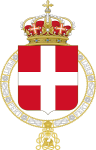
House of Savoy
Humbert Count of Savoy (980)
Royal haplogroup: R1b1a1b1a1a2b1--
MATCH! Subclade distance: 2

House of Audley
Henry de Aldithley (1175-1246)
Royal haplogroup: R1b1a1b1a1a2b1--
MATCH! Subclade distance: 2

Clan Hay
William II de Haya (1160)
Royal haplogroup: R1b1a1b1a1a2b1--
MATCH! Subclade distance: 2
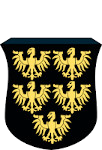
Austrian Royalty
Habsburg Family
Royal haplogroup: R1b1a1b1a1a2b1--
MATCH! Subclade distance: 2
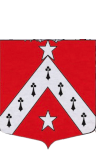
House Telford
Taillefer of Normandy (1066)
Phoenician Era Kerkouane Tunisia (550 BC) (1.311)
Neolithic Morocco Skhirat-Rouazi (3250 BC) (8.118)
Roman Era Necropolis Orientale Sitifis Algeria (210 AD) (9.28)
Guanche Tenerife Canary Islands (800 AD) (9.624)
Guanche Canary Islands (1100 AD) (10.08)
mtDNA: J2a1a1a
 You are the #1 top match to this sample!
You are #1 among a select few users who also have a deep dive match with this sample. This makes your relationship to this individual very unique. Full research for this sample is activated for you regardless of your access level. Touch the info button for more information.
The origin of the Europeans
The first immigration of modern humans
A genetic analysis of bone fragments unearthed at an archaeological site near Ranis in central Germany shows conclusively that modern humans — Homo sapiens — had already reached Northern Europe 45,000 years ago, overlapping with Neanderthals for several thousand years before the latter went extinct.
The findings establish that the site which is known for its finely flaked, leaf-shaped stone tool blades, is among the oldest confirmed sites of modern human Stone Age culture in north central and northwestern Europe. The tools are are clearly different from the more primitive ones of the Neanderthals.
The climate at that time was a medium-cold steppe-type environment. This overlaps with the latest directly radiocarbon-dated Neanderthal remains, suggesting that Neanderthal and modern human presence overlapped in Europe for some millennia before they were driven to extinction. (30a)
The knowledge about the origins of the current inhabitants of Europe and the history of their precursors is continually improving by the many new DNA research techniques. One of the oldest fossils of anatomically modern humans of Europe is a modern human fossil femur found in 2008 on the banks of the river Irtysh near Ust'-Ishim in western Siberia, dated at about 45,000 years old. His Y-DNA haplogroup is K2a-M2335 and his mt-DNA is R*. (31)
An other found settlements from hunter-gatherers is found in Extinctiondorf in Austria. They date from 41,000 BCE. (30)
A skeleton was found on the Middle Don River in Russia. This dates from 35,000 BCE. It is named Kostenki 14 and belonged to mt-DNA haplogroup U2* and the Y-DNA haplogroup C1b1-K281*. Subgroups hereof are today seen in the Middle East, in Central, South and Southeast Asia, and in Northern China. He belongs to the Basal Eurasian Population from which both current Europeans and North Asians descend. It contains more Neanderthal DNA, and in longer tracts than present Europeans. This is consistent with the shorter period of time since the last matings. (32)
His genome reveals the timing of divergence of Western Eurasians and East Asians to be more than 32,200 BCE; and shows that European genomic structure today dates back to the Upper Paleolithic deriving from a meta population that at times stretched from Europe to central Asia. (33)
The skin color changes to a lighter variant by genes from the Neanderthals and by natural selection because reduced pigmentation promotes the production of vitamin D and therefore the life chances in the dark North. The final white European colour first appeared in the Neolithic after the arrival of the Anatolian agrarians. (34)
Kit: Elite Celtic Burial Germany Magdalenenberg Villingen-Schweningen (MBG008)
Your DNA matches many ancient individuals from history. This chart represents a union of all your matching samples and their own individual classification. The displayed result is your personalized ancestral breakdown.

This is Y-DNA distribution of all the samples which match this kit;

R1b 66.0%
←
Dark Ages Italy South Tyrol Malles Burgusio Santo Stefano | 450 AD (1895) | Genetic Distance: 8.648 | mtDNA: U8a1a1a1 | Y-DNA: R1b1a2a1a2b1a1 | |
Gallic Cenomani Tribe Italy Verona Seminario Vescovile | 300 BC (3214) | Genetic Distance: 11.08 | mtDNA: U5a1a2b | Y-DNA: R1b1a1b1a1a2c1 | |
Gallo-Celtic Switzerland Pont de Cornaux-Les-Sauges | 200 BC (3434) | Genetic Distance: 8.54 | mtDNA: U5b1c2 | Y-DNA: R1b1a1b1a1a2b1a1 | |
Gallo-Celtic Switzerland Pont de Cornaux-Les-Sauges | 200 BC (3439) | Genetic Distance: 12.39 | mtDNA: H3+152 | Y-DNA: R1b1a1b1a1a2b1 | |
Deep Dive Viking Hesselbjergmarken Denmark | 875 AD (VK87) | Total shared SNPs: 152.0 | Largest SNP chain: 152.0 | mtDNA: K1c2 | Y-DNA: R1b1a1b1a1a2a1b1a |
Deep Dive Frankish Grave Lower Saxony Hannover-Anderten Germany | 400 AD (ADN014) | Total shared SNPs: 137.0 | Largest SNP chain: 137.0 | mtDNA: H | Y-DNA: R1b1a1b1a1a1c2b2a1b |
Deep Dive Celtic Iron Age Bratislava Slovakia | 95 BC (I11713) | Total shared SNPs: 110.0 | Largest SNP chain: 110.0 | mtDNA: V18a | Y-DNA: R1b1a1b1a1a2a1b3 |
Lombard Warrior Elite Collegno Northern Italy | 580 AD (COL_017b) | Genetic Distance: 4.976 | mtDNA: I2d | Y-DNA: R1b1a1b | |
Late Roman Empire Pannonia Hungary Fonyod | 440 AD (FVD002) | Genetic Distance: 5.03 | mtDNA: H4a1a1a | Y-DNA: R1b1 | |
Lombard Warrior Elite Collegno Northern Italy | 580 AD (COL_017x) | Genetic Distance: 5.113 | mtDNA: I2d | Y-DNA: R1b1a1b | |
Merovingian Grave North Rhine-Westphalia Germany Alt-Inden | 600 AD (IND017) | Genetic Distance: 5.892 | mtDNA: U3a1 | Y-DNA: R1b1a1b1a1a2b1 | |
Bronze Age Prague Czech Kobylisy | 1813 BC (I4887) | Genetic Distance: 6.06 | mtDNA: K1a2c | Y-DNA: R1b1a1b1a1a2b1 | |
Iron Age Gyor-Moson-Sopron Hungary | 260 BC (I18492) | Genetic Distance: 6.702 | mtDNA: H58 | Y-DNA: R1b1a1b1a1a2b1 | |
Elite Celtic Burial Germany Ludwigsburg Roemerhuegel | 450 BC (LWB002_ss) | Genetic Distance: 6.784 | mtDNA: H2a2a1 | Y-DNA: R1b1a1b1a1a | |
Bronze Age Hostivice-Palouky Czech | 1050 BC (I15041) | Genetic Distance: 6.847 | mtDNA: H1 | Y-DNA: R1b1a1b1a1a2b1 | |
Medieval Hungary Carolingian Border Sarbogard Tringer Tanya | 950 AD (AHPS144) | Genetic Distance: 6.874 | mtDNA: J1b1a1 | Y-DNA: R1b1a1b1a1a2c1 | |
Late Imperial Roman Serbia Timacum Kuline Ravna Village | 380 AD (I15552) | Genetic Distance: 7.016 | mtDNA: H1c | Y-DNA: R1b1a1b1b3a1a | |
Lombard Era Collegno Northern Italy | 580 AD (COL_034) | Genetic Distance: 7.398 | mtDNA: H50 | Y-DNA: R1b1a2a1a1 | |
Elite Celtic Burial Germany Ludwigsburg Roemerhuegel | 450 BC (LWB002_ss_b) | Genetic Distance: 7.449 | mtDNA: H2a2a1 | Y-DNA: R1b1a1b1a1a | |
Medieval Hungary Carolingian Border Sarbogard-Tringer tanya | 950 AD (AHPS117) | Genetic Distance: 7.617 | mtDNA: K1a+150 | Y-DNA: R1b1a1b1a1a | |
Merovingian Grave North Rhine-Westphalia Germany Alt-Inden | 600 AD (IND005) | Genetic Distance: 7.707 | mtDNA: T2g1a1 | Y-DNA: R1b1a1b1a1a | |
Celtic Briton Stanton Harcourt Oxfordshire | 300 BC (I20583) | Genetic Distance: 7.938 | mtDNA: K1a4a1 | Y-DNA: R1b1a1b1a1a2c1 | |
Post Viking Age Hedeby Schleswig Rathausmarkt Southern Jutland | 1070 AD (SWG006) | Genetic Distance: 7.979 | mtDNA: U5a1c1a | Y-DNA: R1b1a1b1a1a2a1a1a1 | |
Proto-Illyrian Bronze Age Croatia Bezdanjaca Cave | 1150 BC (I18732) | Genetic Distance: 8.001 | mtDNA: HV24 | Y-DNA: R1b1a1b1a1a2b1 |
R1b 66,0%
What we are in the Netherlands
The pie charts below show the distribution of the ten largest Y-DNA haplogroups in the Netherlands at 410 men in 2008, and in the Oud Hertogdom Brabant Project in Flanders among 1057 men in 2013.
The differences between Belgium and the Netherlands are slightly distorted due to the participation of a small number of southern Dutchmen in the Belgian project. In the Belgian project, there was also an under-participation of French-speaking Walloons.
70% of all participants belonged to only four sub-haplogroups: R1b1b2a1 (R-U106), R1b1b2a2* (R-P312*), R1b1b2a2g (R-U152) and I1* (I-M253*). Significant micro-geographical differentiation within the sampling region was detected, mainly between the Dutch (Noord-Brabant) vs. the Flemish regions based on the differences in sub-haplogroup frequencies but not based on the Y-haplotype data within the main sub-haplogroups. A clear gradient was found with higher frequencies of R1b1b2 (R-M269) chromosomes in the northern vs. southern regions, mainly related to a similar trend in the frequency of R1b1b2a1 (R-U106). The genetic pattern faded away during the last centuries but was still detectable in 1950 according to the genealogical data. Nevertheless, the significant genetic differentiations and the clear gradient is not observable any longer in the contemporary population, most likely due to our higher mobility opportunities. (28)
The Differences
The differences between the two countries are quite clear in both haplogroup R1b and I.
Haplogroup R1b has its peak concentration in Great Britain, France and Belgium, with the rate of occurrence decreasing as one moves away from this center.
Haplogroup I has its peak concentration in Scandinavia, with the rate of occurrence decreasing as one moves away from there.
Haplogroup E is found in the Netherlands at almost half the rate of that found in Belgium. The peak for this haplogroup is found in in central Africa, with the concentrations decreasing as one moves north and east: the further from Africa, the lower the rate of occurrence.
Haplogroup J has its peak in Central Asia and the Mediterranean. In the Netherlands, these people could be descendants of Romans or Jews.
Haplogroup G has an approximately 10% higher concentration in the southern part of the Netherlands than in the northern part, being 4.1% in the south and 3.7% in the north.
G 7,18%
G2a2b-L30/L32/U8/S126 is the major European trunk accounting for 80% of the G.
G2a2b1-M406/PF3285. originated in Turkey and probably entered Italy about 8000 years ago. This is the dominating G clade of southern Europe. 50% of the G men in Iraq, Turkey, Greece and the Balearic Islands have this clade, 25% in Georgia (G2a1a is almost 8%), 20% in Italy, 15% in Spain and the Netherlands, 8% in Switzerland, 6% in Iran, and 4% in Poland and Great Britain.
G2a2b2-L141.1+ probably originated in the Caucasus. Most of the northern Europeans belong to this clade. It is also found in Spain and northern Africa, and among the Brahmins in India.
G2a2b2a-P303/S135. occurs at high rates in the northern Caucasus region among the Circassians, Avars and Ingush, and in the majority of G men in Russia and Europe and on the island of Ibiza. It is found at lower rates south of the Caucasus, in Iran and the Middle East, as well as among Brahmins in India and with a certain haplotype in Ashkenazic Jews.
G2a2b2a1-L140/S316. This G clade is dominant in northern and Central Europe, accounting for almost 80% of the G men. This group is estimated to be about 15.000 years old. In some countries it accounts for 7% of the population, but the average is about 3%. It is usually divided into three major clades. It occurs in only small amounts outside the borders of the former Roman Empire. There is an Ashkenazic cluster in north-western Europe.
G 7.18%
←
Elite Celtic Burial Germany Magdalenenberg Villingen-Schweningen | 530 BC (MBG017) | Genetic Distance: 5.582 | mtDNA: H27 | Y-DNA: G2a2b2a1a1b1a1a2a1b | |
Gallo-Roman Mix Crypta Balbi | 500 AD (R108) | Genetic Distance: 7.33 | mtDNA: T2b-a | Y-DNA: G2a2b2a1a1b1a1a2a1b1a | |
Roman Cancelleria Basilica | 1090 AD (R1224) | Genetic Distance: 7.828 | mtDNA: T2b4f | Y-DNA: G2a2b2a1a1b1a1a2a1a1b | |
Elite Celtic Germany Eberdingen-Hochdorf Biegel | 515 BC (HOC003) | Genetic Distance: 7.872 | mtDNA: K1a2a | Y-DNA: G2a2b2a1a1b1 | |
Elite Celtic Germany Eberdingen-Hochdorf Biegel | 515 BC (HOC003b) | Genetic Distance: 8.039 | mtDNA: K1a2a | Y-DNA: G2a2b2a1a1b1 | |
Iron Age Campiglia dei Foci Siena Italy | 645 BC (CAM002) | Genetic Distance: 8.256 | mtDNA: H18 | Y-DNA: G2a2b2a1 | |
Iron Age Oxfordshire Yarnton England | 300 BC (I20588) | Genetic Distance: 8.726 | mtDNA: V | Y-DNA: G2a2b2a1a1b | |
Iron Age Komarom-Esztergom Hungary | 530 BC (I18227) | Genetic Distance: 8.846 | mtDNA: H10a1 | Y-DNA: G2a2b2a1a1c | |
Elite Celtic Burial Germany Ludwigsburg Roemerhuegel | 500 BC (LWB003b) | Genetic Distance: 9.271 | mtDNA: K1b2b | Y-DNA: G2a2b2a1a1b1a1a2a1b |
Kit: Phoenician Era Kerkouane Tunisia (R11759)
.png)
Your closest Ancient populations...
Your DNA matches these ancient populations based on real archaeological samples from over 150 Ancient Civilizations.
Genetic distance measures how close you are to a given sample.
10 means this is your ancient ancestry
20 means this is part of your ancestral link
30 means possibly related to your ancestry
Guanches + Carthaginian (9.269)
Guanches (10.72)
Philistine + Guanches (13.17)
Guanches + Roman Hispania (14.73)
Guanches + Thracian (15.57)
Carthaginian (16.53)
Roman Hispania + Carthaginian (17.93)
According to Roman legend, Phoenician colonists from modern-day Lebanon, led by Queen Elissa, founded Carthage circa 814 BC. Queen Elissa was an exiled princess of the ancient Phoenician city of Tyre. At its peak, the mighty city she founded, Carthage, become known as the "shining city", ruling 300 other cities around the western Mediterranean Sea. The Carthaginian Empire extended over much of the coaster of Northwest Africa as well as most of coastal Iberia and the islands of the western Mediterannean Sea. For much of its histroy, Carthage was on hostile terms with the Greeks in Sicily and the Roman Republic. The city also had to deal with potentially hostile Berbers, the local inhabitants of North Africa. In the Punic Wars against Rome, the Carthaginian General Hannibal Barca led an overland invasion of Italy by crossing the Alps with Elephants. After crushing victories over Roman armies in the battle of Trebia and Trasimene, Hannibal led a crushing defeat of the Romans at Cannae. In 146, after the third and final Punic War following hundreds of years of conflict, Roman forces destroyed Carthage. They utterly destroyed the city, enslaved whoever was still alive and poured salt all over the land to ensure nothing could grow back.
The Lusitani and Celtiberians who lived in western Iberia resisted Roman attempts to pacify them until 61 BC when Julius Caesar arrived on the scene. The final conquest of Hispania was accomplished under Augustus, between the years 39 and 19 BC. In 13 BCE Hispania was divided into three provinces: Baetica, Lusitania, and Tarraconensis. Hispania was significantly Romanized throughout the imperial period and it came to be one of the most important territories of the Roman Empire. Emperors Trajan and Hadrian were both born there and most all of the people of Hispania were granted Roman citizen status. Despite this, Legio VII Gemina was permanently stationed in Hispania Tarraconensis. Its base was at Leon to be close to, and to protect the gold and iron mines of Gallica. Hispania finally fell from the Roman Empire with the great Germanic migrations of the 4th and 5th centuries AD. Alani, Seuvi, Vandals and Visigoths poured through Gaul and into the west, effectively removing Hispania from Roman control by about 409 AD. Hispania's economy expanded greatly under Roman Rule. The province, along with North Africa, served as a granary for the Roman market, and its harbors exported gold, wool, olive oil, and wine. Agricultural production increased with the introduction of irrigation projects, some of which remain in use even today.
Your closest genetic modern populations...
1. Mozabite_Berber (12.32)
2. Moroccan (13.16)
3. Algerian (17.05)
4. Tunisian (18.12)
5. Sardinian (29.93)
6. West_Sicilian (31.23)
7. Tuscan (31.40)
8. Maltese (31.90)
Deep Dive Matches
These matches are your ancient relatives with whom you share actual DNA Segments!
Here we match your DNA directly to ancient DNA at the chromosome level. The bars below represent Chromosomes (1-22) where you and the ancient sample share the same SNPs (genetic markers) with the same alleles (values) for a given chain. The more segments and longer the chains, the greater mathematical confidence exists of shared ancestry.
Higher quality samples from the Medieval Age might share chains of 500 SNPs. Low quality samples from the Bronze Age might share 100 SNPs
Migration Era Grave Hassleben Thuringia Germany 450 AD R11868
mtDNA: Uncertain
Y-DNA: R1b1a1b1a1a2b1a2 (S368/Z34)
Shared DNA: (Sample Quality: 47)
19 SNP chains (min. 60 SNPs) / 3088.79 cM
Largest chain: 35681 SNPs / 265.9 cM
Your raw DNA is 100 % closer than other matching users
mtDNA: ?
Y-DNA: R1b1a1b1a1a2b1a2 (S368/Z34) ISOGG 2020
19 SNP chains (min. 60 SNPs) / 3088.79 cM
Largest chain: 35681 SNPs / 265.9 cM
Your raw DNA is 100 % closer than other matching users
mtDNA: ?
Y-DNA: R1b1a1b1a1a2b1a2 (S368/Z34) ISOGG 2020
Royal haplogroup: R1b1a1b1a1a2b1a-
MATCH! Subclade distance: 1
House of De La Pole
William de la Pole (1290-1366)
Royal haplogroup: R1b1a1b1a1a2b1a-
MATCH! Subclade distance: 1
House of Savoy
Humbert Count of Savoy (980)
Royal haplogroup: R1b1a1b1a1a2b1--
MATCH! Subclade distance: 2
House of Audley
Henry de Aldithley (1175-1246)
Royal haplogroup: R1b1a1b1a1a2b1--
MATCH! Subclade distance: 2
Clan Hay
William II de Haya (1160)
Royal haplogroup: R1b1a1b1a1a2b1--
MATCH! Subclade distance: 2
Austrian Royalty
Habsburg Family
Royal haplogroup: R1b1a1b1a1a2b1--
MATCH! Subclade distance: 2
House Telford
Taillefer of Normandy (1066)
Similar Samples;
Neolithic Morocco Skhirat-Rouazi (3250 BC) (8.118)
Roman Era Necropolis Orientale Sitifis Algeria (210 AD) (9.28)
Guanche Tenerife Canary Islands (800 AD) (9.624)
Guanche Canary Islands (1100 AD) (10.08)
Kit: Dark Ages Italy South Tyrol Malles Burgusio Santo Stefano (2429_82)
You have ancient relatives! (you share identified DNA segments;
Dark Ages Italy South Tyrol Malles Burgusio Santo Stefano 450 AD 2429
mtDNA: J2a1a1a
Shared DNA: (Sample Quality: 3)
20 SNP chains (min. 60 SNPs) / 1458.99 cM
Largest chain: 770 SNPs / 119.64 cM
You are the #1 top match to this sample!You are #1 among a select few users who also have a deep dive match with this sample. This makes your relationship to this individual very unique. Full research for this sample is activated for you regardless of your access level. Touch the info button for more information.
Most distant common ancestors
Assuming no pedigree collapse or endogamy, and that you're related in just one way, the *furthest* back you might need to go to find common ancestors for a match of 1458.99cM is Great-Grandparent or generation 4 on your pedigree chart.The connection could be closer. Also, depending on your family, this match could be a close younger generation relative, such as the descendant of your sibling.
Relationship probabilities (based on stats from The DNA Geek)
Click on any relationship to view a histogram
New: View these relationships in a tree
- 95%Grandparent Aunt / Uncle Half Sibling Niece / Nephew Grandchild
- 5%Half Aunt / Uncle † Half Niece / Nephew † 1C † Great-Grandparent Great-Aunt / Uncle Great-Niece / Nephew Great-Grandchild
- † this relationship has a non-zero probability for 1458.99cM in thednageek's table of probabilities, but is outside the bounds of the shared cM project (99th percentile)

.png)


