#Breaking Truth MyTrueAncestry and our Related DNA across Europe.
.png)
Main Kit: Ngongo Mbata Kongo Kingdom (NGO001)
You have ancient relatives! (you share identified DNA segments)Enslaved Adult Female Laborer Catoctin Iron-Working Furnace Antebellum Maryland 1810 AD I8097
mtDNA: L3e1
3 SNP chains (min. 60 SNPs) / 7.98 cM
Largest chain: 191 SNPs / 3.29 cM
Your raw DNA is 99 % closer than other matching users
2. Bantu (8.719)
3. Mandenka (12.24)
4. Sub-Saharian (12.67)
5. Yoruba (12.67)
6. Yoruban (13.35)
7. Bantu_S.W. (15.48)
8. Bantu_S.E. (16.96)
Liberated Slave Trade Victim St. Helena Ruperts Valley 1848 AD STH_281
mtDNA: 3.6%
2 SNP chains (min. 60 SNPs) / 43.81 cM
Largest chain: 119 SNPs / 22.27 cM
Your raw DNA is 96 % closer than other matching users
1. Medieval Coastal Kenya Taita Taveta Makwasinyi 1550 AD
mtDNA: L0a1a2
Y-DNA: E1b1a1a1a2a1a3a1d (M4103) ISOGG 2019
Top 99 % match vs all users
In the hinterlands of coastal Kenya, near the rolling hills of Taita Taveta, a significant archaeological discovery has unveiled a snapshot of medieval Swahili life. The remains of a man, believed to have lived and died around 1550 AD, offer a remarkable window into a world where Africa met the Indian Ocean in a vibrant exchange of cultures, goods, and ideas.
This individual, a male, was interred in a traditional fashion, reflecting the customs of the time. Through the detailed examination of his remains, scientists have determined his paternal ancestry to fit within the Y-DNA haplogroup E1b1a1a1a2a1a3a1d, a genetic marker that speaks to the deep-rooted ties of sub-Saharan populations. His maternal lineage, identified through mitochondrial DNA haplogroup L0a1a2, also connects him to a long maternal history in Africa, underscoring the rich tapestry of genetic heritage that characterizes the continent's inhabitants.
Research link; The Entwined African and Asian Genetic Roots of the Medieval Peoples of the Swahili Coast
https://www.biorxiv.org/content/10.1101/2022.07.10.499442v1The peoples of the Swahili coast of eastern Africa established a literate urban culture by the second millennium CE. They traded across eastern Africa and the Indian Ocean and were among the first sub-Saharan practitioners of Islam. An open question has been the extent to which these early interactions between Africans and non-Africans were accompanied by genetic admixture. We report genome-wide ancient DNA from 80 individuals in five medieval and early modern (1300-1800 CE) coastal towns, as well as people from an inland town postdating 1650 CE. Over half of the ancestry of most coastal individuals came from African ancestors; these African ancestors were primarily female. A slightly smaller proportion of ancestry was from Asia. This Asian component was approximately eighty to ninety percent from Near Eastern males and ten to twenty percent from Indian females. Peoples of African and Asian origins began to mix by around 1000 CE, a time when archaeological evidence documents changes on the coast that are often interpreted as marking the large-scale adoption of Islam. Before roughly 1500 CE, the Near Eastern ancestry detected in the individuals was mainly Persian-related, consistent with the narrative of the Kilwa Chronicle, the oldest history told by the Swahili themselves. After this time, the sources of Near Eastern ancestry became increasingly Arabian, consistent with the archaeological and historical evidence of growing interactions between the Swahili coast and parts of southern Arabia. Subsequent interactions of Swahili coast peoples with other Asian and African groups further changed the ancestry of present-day peoples relative to the ancient individuals we sequenced, highlighting how Swahili genetic legacies can be more clearly understood with ancient DNA.
2. Kindoki Congo 1750 AD -
mtDNA: L1c3a1b
Y-DNA: E1b1a1a1a2a1a3b1a2 (CTS99/Z1725) ISOGG 2020
Top 99 % match vs all users
Genetic Distance: 1.083 - KIN004
Top 99 % match vs all users
5. Zana of Abkhazia
mtDNA: L2b1b1
1934 AD - Genetic Distance: 1.149 - Zana
Top 95 % match vs all users
Original Paper
Open access
Published: 10 February 2018
Abstract
A few decades after the collapse of the Avar Khaganate (c. 822 AD), Hungarian invaders conquered the Carpathian Basin (c. 862–895 AD). The first Hungarian ruling dynasty, the Árpáds played an important role in European history during the Middle Ages. King Béla III (1172–1196) was one of the most significant rulers of the dynasty. He also consolidated Hungarian dominance over the Northern Balkans. The provostry church of the Virgin Mary (commonly known as the Royal Basilica of Székesfehérvár) played a prominent role as a coronation church and burial place of medieval Hungarian kings. The basilica’s building and graves had been destroyed over the centuries. The only royal graves that remained intact were those of King Béla III and his first spouse, Anna of Antioch. These graves were discovered in 1848. We defined the autosomal STR (short tandem repeat) fingerprints of the royal couple and eight additional individuals (two females and six males) found in the Royal Basilica. These results revealed no evidence of first-degree relationship between any of the investigated individuals. Y-chromosomal STR profiles were also established for all the male skeletons. Based upon the Y-chromosomal data, one male skeleton showed an obvious patrilineal relationship to King Béla III. A database search uncovered an existing Y-chromosomal haplotype, which had a single-repeat difference compared to that of King Béla. It was discovered in a person living in an area close to Hungary. This current male line is probably related paternally to the Árpád Dynasty. The control region of the mitochondrial DNA was determined in the royal couple and in the remains of the inferred relative. The mitochondrial results excluded sibling relationship between the King and the patrilineal relative. In summary, we successfully defined a Y-chromosomal profile of King Béla III, which can serve as a reference for the identification of further remains and disputed living descendants of the Árpád Dynasty. Among the examined skeletons, we discovered an Árpád member, whose exact affiliation, however, has not yet been established.
The Árpád Dynasty (c. 850–1301 AD) played an important role in European history during the Middle Ages (Hóman 1940-1943). The first Great Prince Álmos organised the monarchic state in the northern region of the Black Sea c. 850. A few decades after the collapse of the Avar Khaganate (c. 822 AD), Álmos and his son Árpád conquered the Carpathian Basin (c. 862–895 AD) (Szőke 2014). During the conquest, Hungarian invaders, together with Turkic-speaking Kabars assimilated the Avars and Slavonic groups (Szádeczky-Kardoss 1990). Thus, most of the population in the Carpathian Basin originated from the Hun-Turkic cultural community of the Eurasian Steppe and was accompanied by Slavonic and German-speaking groups (László 1996). The origin of Hungarians is still controversial, and this paper cannot cover this complex subject. The Hungarian Great Principality represented the Eurasian steppe empires in Central Europe from c. 862 until 1000. Saint Stephen I, the last Great Prince (997–1000) and first King (1000–1038) of Hungary re-organised this early Hungarian state as a Christian kingdom. Saint Stephen received the royal crown from the Pope and joined the post-Roman Christian political system and cultural commonwealth of Latin Europe (Pohl 2003; Szabados 2011). Hungary remained an independent state between the German and Byzantine empires (Makk 1989). King Béla III (1172–1196) was one of the most significant rulers of the dynasty. He was the second son of King Géza II (1141–1162) and Queen Euphrosyne, the daughter of Mstislav I (1125–1132), the Great Prince of Kiev. Through the mediation of Byzantine Emperor Manuel I Komnenos, Béla married Anna of Châtillon from Antioch (1150–1184), the half-sister of the Emperor’s wife in 1170. After Manuel’s death, King Béla consolidated Hungarian dominance over the Northern Balkans.
- Genetic Distance: 1.153 - SJN001
Top 99 % match vs all users
In the bustling heart of what was once the Aztec capital Tenochtitlan, now Mexico City, lies the story of an individual whose remains whisper tales from a pivotal moment in history. Amidst the layers of earth, archaeologists unearthed the skeletal traces of a man, hailing from the early days of colonial Mexico, a time when the Spanish conquest had not only toppled an empire but also initiated a grim trade in human lives.
This man, who lived and perished around the year 1539 AD, carried within his very DNA the echoes of a distant African heritage. His Y-chromosome bore the E1b1a1a1a1c1b haplogroup, a lineage rooted in Sub-Saharan Africa, hinting at a narrative of involuntary displacement. Likewise, his mitochondrial DNA revealed L1b2a, placing his maternal ancestry in the same vast continent. The combination of these genetic markers tells a poignant story of the forced journeys undertaken by countless Africans as they were brought to the New World in chains, to toil under the cruel yoke of early colonial enslavement.
Research link; https://www.researchgate.net/publication/341056035_Origin_and_Health_Status_of_First-Generation_Africans_from_Early_Colonial_Mexico
April 2020Current Biology 30(11):1-14
DOI:10.1016/j.cub.2020.04.002
The forced relocation of several thousand Africans during Mexico’s historic period has so far been documented mostly through archival sources, which provide only sparse detail on their origins and lived experience. Here, we employ a bio-archaeological approach to explore the life history of three 16th century Africans from a mass burial at the San José de los Naturales Royal Hospital in Mexico City. Our approach draws together ancient genomic data, osteological analysis, strontium isotope data from tooth enamel, δ13C and δ15N isotope data from dentine, and ethno historical information to reveal unprecedented detail on their origins and health. Analyses of skeletal features, radiogenic isotopes, and genetic data from uniparental, genome-wide, and human leukocyte antigen (HLA) markers are consistent with a Sub-Saharan African origin for all three individuals. Complete genomes of Treponema pallidum sub. pertenue (causative agent of yaws) and hepatitis B virus (HBV) recovered from these individuals provide insight into their health as related to infectious disease. Phylogenetic analysis of both pathogens reveals their close relationship to strains circulating in current West African populations, lending support to their origins in this region. The further relationship between the treponemal genome retrieved and a treponemal genome previously typed in an individual from Colonial Mexico highlights the role of the transatlantic slave trade in the introduction and dissemination of pathogens into the New World. Putting together all lines of evidence, we were able to create a biological portrait of three individuals whose life stories have long been silenced by disreputable historical events.

Y-DNA Summary for A0
 = Royal Haplogroup (tap for details)
 Green denotes Ancient Sample matches
Purple denotes Deep Dive matches (matching DNA segments)
A00-T - Shum Laka Cameroon (I10871)
This individual was a child found among 18 stone age human burials located in a natural rock shelter in western Cameroon. Their DNA resembles hunter-gatherer groups from Central Africa combined with West African DNA, rather than modern-day Bantu people who inhabit the region today. Grave goods from the rock shelter included stone tools and pottery were found.
The oldest archaeologically found human fossils are found in Jebel Irhoud in Morocco. These are dated to 315,000 years ago.
All people in the world seem to descend from a woman that to alleged lived around 200.000 ybp in Africa, somewhat younger.
All human Y-DNA haplogroups have sprouted from the common ancestor of all humans. He lived in Africa and had haplogroup A00-AF4. He lived about 250,000 ybp
E1b1a1a1a2a1a3b1a2 - Kindoki Congo (KIN002)
E1b1a1a1a1c1b - Early Colonial Mexico City Slave Trade Victim (SJN001)
E1b1a1a1 - Liberated Slave Trade Victim St. Helena Ruperts Valley (STH_245)
E1b1a1a1 - Liberated Slave Trade Victim St. Helena Ruperts Valley (STH_213)
E1b1a1a1 - Liberated Slave Trade Victim St. Helena Ruperts Valley (STH_289)
E1b1a1a1 - Liberated Slave Trade Victim St. Helena Ruperts Valley (STH_499)
E1b1a1a1 - Liberated Slave Trade Victim St. Helena Ruperts Valley (STH_441)
E1b1a1a1 - Liberated Slave Trade Victim St. Helena Ruperts Valley (STH_514)
E1b1a1 - Taukome Botswana Iron Age (TAU001)
In the intrepid journey through the annals of history, we occasionally stumble upon resounding echoes of our ancestors that offer a glimpse into their lives and deaths. One such individual from the heartland of Botswana, who graced the earth roughly around the year 950 AD during the African Iron Age, has piqued the interest of archaeologists and historians alike. His skeletal remains reveal that he belonged to the Y-DNA haplogroup E1b1a1 and the maternal lineage of mitochondrial DNA haplogroup L0d3b1, providing profound insights into the genetic ancestry of the region's inhabitants.
This enigmatic male was part of a society deeply entrenched in the Iron Age, an era characterized by the blooming synergy of agricultural practices, iron smelting, and trade networks. The treasures unearthed alongside him form a rich tapestry detailing a well-established culture: a cache of iron artifacts, perhaps remnants of tools or weaponry, signifies the technical prowess and craftsmanship that early Batswana metallurgists had mastered. Beads and pottery shards also surfaced, painting a vibrant picture of daily life, where art and utility danced in seamless harmony.
MATCH! Subclade distance: 1
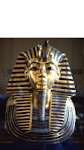
Ancient Egypt
Ramses III (1217 BC-1155 BC)
Meanwhile, the maternal lineage, identified through the mDNA haplogroup L3a2a, speaks of a genetic story tied to the maternal ancestors of all non-Africans that left the continent approximately 60,00070,000 years ago. Remarkably, this man's direct maternal ancestors remained in Africa, painting a picture of unbroken heritage persisting through millennia.
The archaeological site in Kenya where this man was found has revealed artifacts that provide context to his existence. Among the earthen treasures are beads made of ostrich eggshells, iron tools, and pottery shards. These items suggest a community engaged in a range of domestic, artistic, and technological endeavors, reflecting a sophisticated society benefiting from the exchange of goods, ideas, and culture.
mtDNA: L3a2a
Y-DNA: E1b1b1a1a1 (V12/Z1216) ISOGG 2020
MATCH! Subclade distance: 2
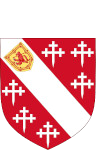
House of Howard
Thomas Howard 2nd Duke of Norfolk (1443-1524)
Archaeological Identifier: OBT-106
Y-DNA: E1b1b1a1b1a6a1b (A10952/BY4523) ISOGG 2019
MATCH! Subclade distance: 1
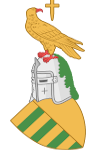
House of Basarab
Basarab I of Wallachia (1310-1352)
Vlad the Impaler (1431-1476)
Skanderbeg (1405-1468)
Archaeological Identifier: OBT-51
Y-DNA: E1b1b1a1b1a6a1 (CTS9320/V3518) ISOGG 2019
MATCH! Subclade distance: 1
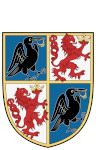
Hunyadi Dynasty
Voyk Hunyadi (1419)
John Hunyadi (1456)
Matthias Corvinus (1490)
Royal haplogroup: E1b1b1a1b1a6a1e
MATCH! Subclade distance: 1
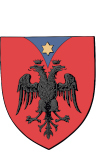
House of Kastrioti
Konstantin Kastrioti (1390)
Skanderbeg (1405-1468)
Y-DNA Summary for J
= Royal Haplogroup (tap for details) Green denotes Ancient Sample matches
Purple denotes Deep Dive matches (matching DNA segments)
J1a2a1a2 - Medieval Coastal Kenya Mtwapa (I19419)
J1a2a1a2 - Medieval Coastal Kenya Mtwapa (I19417)
J1a2a1a2d2b - Medieval Coastal Kenya Mtwapa (I19413)
J1a2a1a2d2b - Medieval Coastal Kenya Mtwapa (I19381)
J1a2a1a2d2b - Medieval Coastal Kenya Mtwapa (I19401)
J - Medieval Coastal Kenya Mtwapa (I23660) mtDNA: L3d1a
Y-DNA: J (M304/PF4609) ISOGG 2017
Royal haplogroup: J1
MATCH! Subclade distance: 1
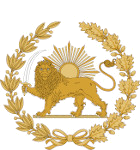
Persian Royalty
Fath Ali Shah Qajar (1772-1834)
Royal haplogroup: J2a1
MATCH! Subclade distance: 3

Scottish Royalty
Earl of Eglinton (1460-1545)
mtDNA: L3e1d1
Y-DNA: R1a1a1 (M417) ISOGG 2020
MATCH! Subclade distance: 1
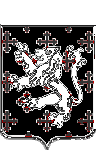
House de Livet
Gilbert de Lyvet (1244)
Guillaume de Livet (1431)
Louis Charles de Levis (1647-1717)
mtDNA: H1
Y-DNA: R1a1a1b2a (F3105/S340/Z94) ISOGG 2020
Royal haplogroup: R1a1a1b2a2a1
MATCH! Subclade distance: 3
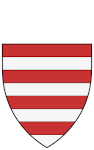
Arpad Dynasty
Bela III
Emeric
Ladislaus III
Andrew II
Bela IV
Stephen V
Ladislaus IV
Andrew, Duke of Slavonia

.png)


No comments:
Post a Comment