Kit: Phoenician Cas Moli Ibiza (MS10614)
These matches are your ancient relatives with whom you share actual DNA Segments!
Here we match your DNA directly to ancient DNA at the chromosome level. The bars below represent Chromosomes (1-22) where you and the ancient sample share the same SNPs (genetic markers) with the same alleles (values) for a given chain. The more segments and longer the chains, the greater mathematical confidence exists of shared ancestry.
Higher quality samples from the Medieval Age might share chains of 500 SNPs. Low quality samples from the Bronze Age might share 100 SNPs
Late Period Ancient Egypt 650 BC JK2911
mtDNA: M1a1
Y-DNA: J2b1 (M205)
Shared DNA: (Sample Quality: 5)
4 SNP chains (min. 60 SNPs) / 421.16 cM
Largest chain: 17392 SNPs / 120.24 cM
Your raw DNA is 100 % closer than other matching users

Ancient Egyptian (Genetic match)
1. Palestinian (8.337)
2. Samaritian (9.216)
3. Coptic_Egyptian (10.21)
4. Egyptian (10.53)
5. Jordanian (10.80)
6. Libyan_Jewish (12.25)
7. Tunisian_Jewish (13.48)
8. Bedouin (14.32)
Ah, let us delve into the fascinating life and times of an individual from Late Period Ancient Egypt, who walked the banks of the Nile some 2,650 years ago. His genetic lineage whispers tales of bygone eras, with paternal ancestry rooted in the Y-DNA haplogroup J2b1, indicating connections that may trace back to the Fertile Crescent. This bears witness to the ancient movements of peoples, as Mediterranean cultures intertwined with those of Egypt. On his mother's side, the MTDNA haplogroup M1a1 presents a tapestry of maternal heritage, possibly originating from eastern Africa or the Near East, enriching our understanding of the genetic melting pot that was the Nile Valley.
Wrapped in the embrace of the sand for untold centuries, the mans remains offer a gateway into the customs and daily life of his time. Late Period Egypt was a time of both turmoil and opulence, as the nation grappled with the pressures of foreign influences and internal changes. This period was marked by artistic and religious revivals as well as political fragmentation, which sometimes led to foreign rule by powers such as the Assyrians and Persians before the eventual conquest by Alexander the Great.
mtDNA: M1a1
Y-DNA: J2b1 (M205) ISOGG 2020
Similiar Y-DNA samples;
Medieval Yemen Soqotra Momi Zaflah: J2b1
Medieval Serbia Lepenski Vir: J2b1
Late Bronze Age Canaanite Megiddo: J2b1
Early Anglo Saxon Cemetery West Heslerton Yorkshire: J2b1
Post Medieval Plague Victim Ellwangen Germany: J2b1
Bronze Age Yehud Southern Levant: J2b1
Imperial Rome Centocelle: J2b1
Medieval Cancelleria Basilica: J2b1
Canaanite: J2b1
Ancient Deep Dive Breakdown:
.png)
Here, we provide the first reliable data set obtained from ancient Egyptians using high-throughput DNA sequencing methods and assessing the authenticity of the retrieved ancient DNA via characteristic nucleotide misincorporation patterns13,14 and statistical contamination tests15 to ensure the ancient origin of our obtained data.
By directly studying ancient DNA from ancient Egyptians, we can test previous hypotheses drawn from analysing modern Egyptian DNA, such as recent admixture from populations with sub-Saharan16 and non-African ancestries17, attributed to trans-Saharan slave trade and the Islamic expansion, respectively. On a more local scale, we aim to study changes and continuities in the genetic makeup of the ancient inhabitants of the Abusir el-Meleq community (Fig. 1), since all sampled remains derive from this community in Middle Egypt and have been radiocarbon dated to the late New Kingdom to the Roman Period (cal. 1388BCE–426CE, Supplementary Data 1). In particular, we seek to determine if the inhabitants of this settlement were affected at the genetic level by foreign conquest and domination, especially during the Ptolemaic (332–30BCE) and Roman (30BCE–395CE) Periods.
Results
Samples and anthropological analysis
All 166 samples from 151 mummified individuals (for details of the 90 individuals included in the later analysis, see Supplementary Data 1) used in this study were taken from two anthropological collections at the University of Tübingen and the Felix von Luschan Skull Collection, which is now kept at the Museum of Prehistory of the Staatliche Museen zu Berlin, Stiftung preußischer Kulturbesitz (individuals: S3533, S3536, S3544, S3552, S3578, S3610). According to the radiocarbon dates (Supplementary Data 1, see also ref. 18), the samples can be grouped into three time periods: Pre-Ptolemaic (New Kingdom, Third Intermediate Period and Late Period), Ptolemaic and Roman Period. During their conservation in the Tübingen and Berlin collections the remains underwent different treatments: some were preserved in their original mummified state, while others were macerated for anthropological analysis or due to conservation problems19.
In most cases, non-macerated mummy heads still have much of their soft tissue preserved. Some of the remains (individuals analysed in our study: 1543, 1547, 1565, 1577, 1611) have traces of gold leaf near the mouth and the cheekbone, which is characteristic for mummies from the Ptolemaic Period onwards20. In most cases the brain was removed and the excerebration route was highly likely transnasal, resulting in visible defects on the cribriform plate (for the individuals analysed in our study, see Supplementary Data 1). In summary, the excellent bone preservation and the more or less good soft tissue preservation made a wide-ranging analysis possible19.
Ep 15. DNA just gave a SURPRISING fact on Ancient Greece, showing that they are
https://www.youtube.com/@withoutHistory
Carthago-Iberian-Mehrebi Cordoba Caliphate 950 AD I7500
mtDNA: M1b1a
Y-DNA: E1b1b1b1a1 (M183)
Shared DNA: (Sample Quality: 2)
1 SNP chain (min. 60 SNPs) / 17.25 cM
Largest chain: 122 SNPs / 17.25 cM
Your raw DNA is 84 % closer than other matching users
Ptolemaic Egypt 50 BC JK2888
mtDNA: U6a2
Y-DNA: E1b1b1a1b2-V22
Shared DNA: (Sample Quality: 2)
1 SNP chain (min. 60 SNPs) / 9.33 cM
Largest chain: 129 SNPs / 9.33 cM
Your raw DNA is 71 % closer than other matching users
Y-DNA Matches
Males inherit a Y-chromosome haplogroup from their father which represents the all male lineage. If you have had your Y-haplogroup tested, you can enter the result here to find matches with the same haplogroup.
Females who have had a direct male relative (e.g. father, brother, uncle) tested can also use those results.
Dundonald Castle

Clan Stewart
(R1b1a1b1a1a2c1a1a1a1a1b)

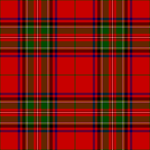
Virescit Vulnere VirtusThis Latin motto translates to Courage grows strong at a wound. It suggests that the Clan Stewart grows stronger in the face of adversity and challenges, much as a person's resolve might solidify when they are wounded or under threat.
You share DNA with the dynasty associated with this castle ...
Y-DNA Matches
Scottish Royalty
Differences: 2
Delta: 0
Deep Dive Matches
(shared DNA segments)
Late Period Ancient Egypt (JK2911) 650 BC
Total SNPs: 59805.0

mtDNA: T2b11
Y-DNA: R1b1a1b1a1a2c1 (L21/M529/S145) ISOGG 2020
Royal haplogroup: R1b1a1b1a1a2c1b2a
MATCH! Subclade distance: 3

Clan Calder
Hugo de Cadella (1178)
Royal haplogroup: R1b1a1b1a1a2c-
MATCH! Subclade distance: 1

Scottish Royalty
Robert II
Robert III
James I
James II
James III
James IV
James V
Royal haplogroup: R1b1a1b1a1a2c-
MATCH! Subclade distance: 1
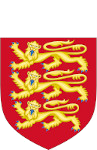
English Royalty
James I (1566-1625)
Charles I (1600-1649)
Charles II (1630-1685)
James II (1633-1701)
Royal haplogroup: R1b1a1b1a1a2--
MATCH! Subclade distance: 2

Clan Armstrong
Lowland Scottish Clan Armstrong
Neil Armstrong
Royal haplogroup: R1b1a1b1a1a2--
MATCH! Subclade distance: 2

House of Lippe Detmold
Bernhard I (1123)
mtDNA: T2b44b
Y-DNA: R1b1a1b1a1a2b
(PF6570/S28/U152) ISOGG 2020
Royal haplogroup: R1b1a1b1a1a2-
MATCH! Subclade distance: 1
Clan Armstrong
Lowland Scottish Clan Armstrong
Neil Armstrong
Royal haplogroup: R1b1a1b1a1a2-
MATCH! Subclade distance: 1
House of Lippe Detmold
Bernhard I (1123)


Kit: Phoenician Era Kerkouane Tunisia (R11759);
Migration Era Grave Hassleben Thuringia Germany 450 AD R11868
mtDNA: Uncertain
Y-DNA: R1b1a1b1a1a2b1a2 (S368/Z34)
Shared DNA: (Sample Quality: 47)
19 SNP chains (min. 60 SNPs) / 3088.79 cM
Largest chain: 35681 SNPs / 265.9 cM
Your raw DNA is 100 % closer than other matching users
Royal haplogroup: R1b1a1b1a1a2b1d1
MATCH! Subclade distance: 3
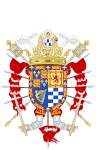
House de Alba
Gutierre Alvarez de Toledo (1429)
Garcia Alvarez de Toledo, 2nd Count of Alba de Tormes (1472)
Royal haplogroup: R1b1a1b1a1a2b1a1
MATCH! Subclade distance: 3

Clan Crawford
Sir Reginald Crawford (1296)
Royal haplogroup: R1b1a1b1a1a2b1a1
MATCH! Subclade distance: 3
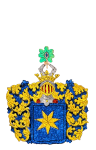
Riddarhuset Gyllenstierna
Aagaard (1310)
Niels Erikssen (1350)
Royal haplogroup: R1b1a1b1a1a2b1a1
MATCH! Subclade distance: 3

Clan Hunter
Aylmer le Hunter (1296)
Royal haplogroup: R1b1a1b1a1a2b1a1
MATCH! Subclade distance: 3

Clan Cheyne
Sir Reginald le Chain (1350)
Royal haplogroup: R1b1a1b1a1a2b1a
MATCH! Subclade distance: 2
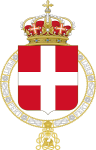
House of Savoy
Humbert Count of Savoy (980)
Royal haplogroup: R1b1a1b1a1a2b1a
MATCH! Subclade distance: 2

House of De La Pole
William de la Pole (1290-1366)
Royal haplogroup: R1b1a1b1a1a2b3c
MATCH! Subclade distance: 2
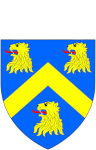
House of Wyndham
Sir John Wyndham (1558-1645)
Sir Francis Wyndham 3rd Baronet (1654-1716)
Royal haplogroup: R1b1a1b1a1a2b3c
MATCH! Subclade distance: 2

Clan FitzRandolph
Count Eudon Penteur (999-1079)
Randulf (1129)
Richard FitzRalph (1360)
Royal haplogroup: R1b1a1b1a1a2b3c
MATCH! Subclade distance: 2
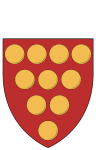
House La Zouche
Alan de la Zouche (1136-1190)
Roger la Zouche (1175-1238)
Alan la Zouche (1205-1270)
Royal haplogroup: R1b1a1b1a1a2b3c
MATCH! Subclade distance: 2
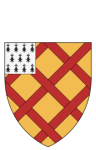
House Noel
Robert Noel (1066)
Royal haplogroup: R1b1a1b1a1a2b2
MATCH! Subclade distance: 1

Clan Strange
Home le Estraunge (1255)
Thomas de Strang (1340)
Royal haplogroup: R1b1a1b1a1a2b2
MATCH! Subclade distance: 1

Clan Erskine
John Erskine 19th Earl of Mar (1558-1634)
Royal haplogroup: R1b1a1b1a1a2b4
MATCH! Subclade distance: 1
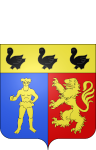
House de Malain
Francis Malin (1653)
Gui de Mediolano (1075)
Royal haplogroup: R1b1a1b1a1a2b1
MATCH! Subclade distance: 1
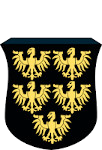
Austrian Royalty
Habsburg Family
Royal haplogroup: R1b1a1b1a1a2b1
MATCH! Subclade distance: 1

House of Audley
Henry de Aldithley (1175-1246)
Royal haplogroup: R1b1a1b1a1a2b1
MATCH! Subclade distance: 1

Clan Hay
William II de Haya (1160)
Royal haplogroup: R1b1a1b1a1a2b1
MATCH! Subclade distance: 1
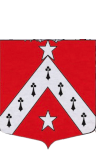
House Telford
Taillefer of Normandy (1066)
@jacquelinebattalora
Join the journey of empowerment and enlightenment with @whitenessdoctor on YouTube. Explore fascinating insights and empowering perspectives. Don't miss out on the opportunity to expand your depth of knowledge. Let's embark on this exciting adventure together. Remember, Knowledge = Power!

.png)


No comments:
Post a Comment